Guide
How to make money with YouTube Playables: ads and revenue sharing
How YouTube Playables games earn: pre-roll, interstitial and rewarded ads, the revenue-sharing pilot, Google's ad rules and why plays don't tell you revenue.
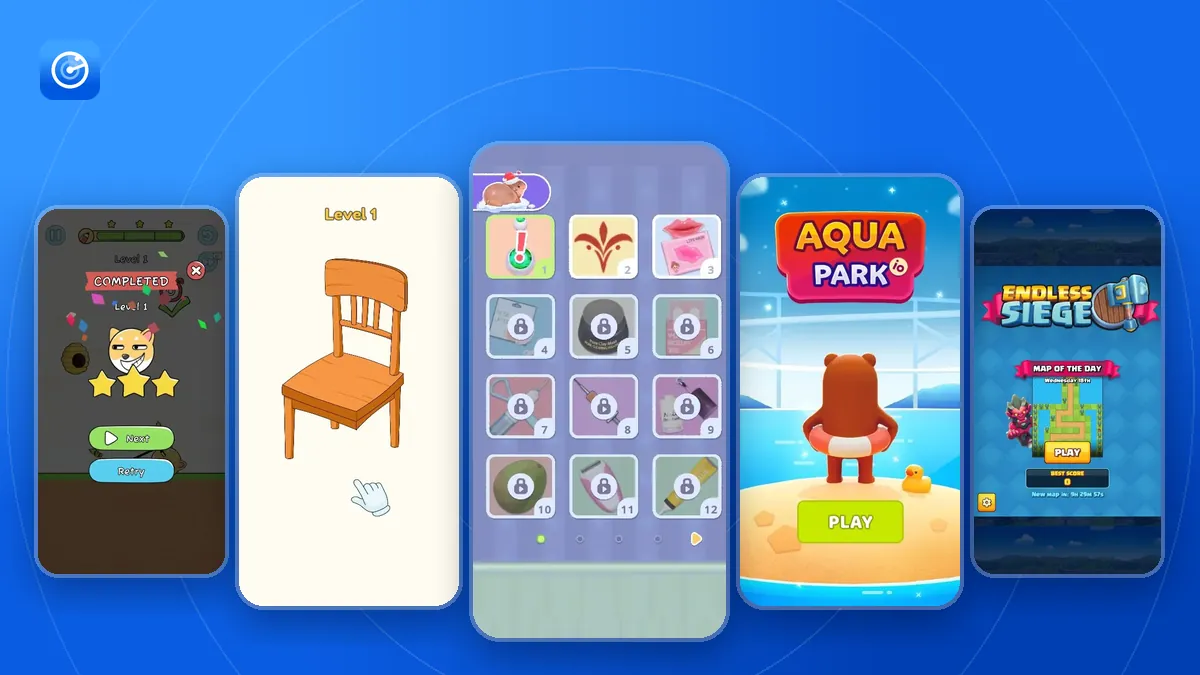
Players don't pay for YouTube Playables games, so the money comes from ads. This guide explains which ad formats a game can use, what Google says about paying developers, the rules ads have to follow and why the plays counter tells you nothing about revenue. Everything about the platform comes from Google's documentation, linked at the end.
The three ad formats
| Format | When it plays | What the developer does |
|---|---|---|
| Pre-roll | While the game first loads | Nothing: YouTube adds it automatically |
| Interstitial | At a natural break, such as the end of a level | Calls ytgame.ads.requestInterstitialAd() |
| Rewarded | When the player chooses to watch an ad for an in-game reward | Calls ytgame.ads.requestRewardedAd(id) |
Interstitial and rewarded ads are on by default and can be switched off in the Playables Developer Portal, where monetization settings also have to be configured. A request doesn't guarantee that an ad is shown, so the game has to carry on when none comes back. A rewarded request resolves to true only when the player has earned the reward.
// at a natural break, for example after a level
try { await ytgame.ads.requestInterstitialAd(); } catch (e) { /* continue the game */ }

// when the player taps "watch an ad for a bonus"
const earned = await ytgame.ads.requestRewardedAd('extra_life');
if (earned) giveExtraLife();
Does YouTube pay developers?
Google's monetization page says only this: “we are piloting revenue sharing with a select number of Playable creators”, and the aim is “to align with the broader YouTube monetization programs over time”. It publishes no rates, no payout terms and no eligibility criteria beyond the pilot.
In practice many studios release through publishers that already work with YouTube. Two publishers, Mediacube and Playgama, released 416 of the 1,349 games in the catalog on November 18, 2026 (31%). The terms between studios and publishers are private. Who publishes what is on the publishers page.
Where ads are shown
- Only in the YouTube app on Android and iOS, according to Google's developer FAQ.
- Only for a subset of users in regions and on platforms where Playables ads are available.
- Not for YouTube Premium members.
So plays on the website or by Premium members come with no ads at all. To test ads, Google suggests using an account without Premium.
Rules for ads in games
Google's monetization requirements are part of the review every release goes through:
- Rewarded ads must be strictly opt-in. They can't start on their own, the game can't push the player to click the ad, and it must not block normal progress until an ad is watched. There must always be a clear way to keep playing without the ad.
- Interstitial ads may only appear at natural transitions between two different screens, never during active gameplay and never unexpectedly.
- Sound and pause must keep working with ads: the game has to follow YouTube's mute setting and stop on
onPause. - No outside services. A game must not show ads, sell items or take payments through services other than YouTube's.
- No real-world value. Rewards and items can only have value inside the game and can't be transferred or traded.
- Advertiser-friendly content. With monetization on, the game's title, description and images must follow YouTube's advertiser-friendly guidelines.
Breaking these rules can turn monetization off. If a release fails the monetization check, ads stay off for that release even when it is live, until a fixed version passes review and is published.
Why plays don't tell you revenue
The plays number on a game card counts game launches. It doesn't say how many ads were shown, on which platform the game was played or how many players have Premium, and YouTube rounds it. Two games with the same plays can earn very different amounts.
What plays do show is reach. On November 18, 2026 the median game older than 90 days had 2.6M plays, and 66% of those games had passed 1M. The benchmarks page shows what is typical at each age, and what the plays number means explains how to read the counter. Inside the Developer Portal, developers also see their own analytics, including retention and crash rates.
Frequently asked questions
Does YouTube pay for Playables games?
Google says it is piloting revenue sharing with a select number of creators and plans to align with YouTube's wider monetization programs over time. It doesn't publish rates or payout terms.
How do I add ads to my Playable?
Pre-roll ads are added by YouTube automatically. For interstitial and rewarded ads, call ytgame.ads.requestInterstitialAd() and ytgame.ads.requestRewardedAd(id) from the Playables SDK and check the monetization settings in the Developer Portal.
Can a Playables game have in-app purchases?
Not through outside services: Google's requirements forbid in-app purchases, ads and other monetization through off-platform services.
Why are ads not showing in my game?
Ads only run in the YouTube app on Android and iOS, for some users in eligible regions, and not for Premium members. Also check that the ad types are enabled in the Developer Portal and that the release passed the monetization check.
Sources
- Monetization: ad formats, revenue-sharing pilot
- Monetization requirements: rules for ads, purchases and rewards
- Developer FAQ: where ads show, failed monetization, analytics
- SDK reference: ad functions
Checked against Google's documentation on November 18, 2026. Catalog numbers are from Playables Radar for the same date.